Editorial: A megabucks bailout is brewing for Big Ag as the farm economy struggles
Published in Op Eds
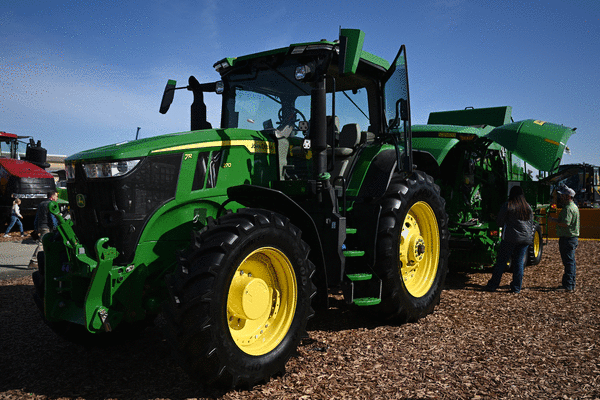
The White House has scheduled a party for Friday and you, taxpayer, will be picking up the check – in more ways than one.
The Celebration of Agriculture event at the South Lawn is intended to “shine a spotlight on the men and women growing our food, fiber and fuel.” Unfortunately, the spotlight also will illuminate trouble in the agricultural economy, which the U.S.-Israeli war against Iran has made worse, on top of tariffs that have severely punished the sector.
The White House response to hard times on the farm relies heavily on taxpayer-funded support, much of which historically flows disproportionately to larger operations. The Agriculture Department last month forecast government payments will jump 45% this year to $44.3 billion, roughly 28 cents of every dollar in U.S. net farm income.
On top of that, the administration will probably use this month’s so-called celebration to announce a big increase in the amount of ethanol that oil companies are required to blend into their gasoline.
Ethanol is brewed from corn, supporting crop prices and thereby helping grain farmers. But it also provides less mileage per gallon and does not reduce the price at the pump, because of transportation and infrastructure costs, according to the U.S. Government Accountability Office. The ethanol subsidy is a longstanding giveaway to Big Ag at the expense of motorists and it’s almost certain to go up.
Why all this support for the farm sector while most of the country struggles on its own?
For one, it’s an election year and rural voters in the past have turned out in droves for President Donald Trump. Yet agriculture has suffered badly under Trump, and even fat government checks are unlikely to make up for policy decisions that have clobbered growers and ranchers.
The war against Iran is a particularly rough blow. While drivers everywhere can’t help but notice how sharply pump prices have risen, the trouble on the farm goes beyond gassing up the F-150.
Midwest agriculture is heavily mechanized, and those planters, tractors and combines chugging around Illinois farm country use a lot of fuel. The cost of taking corn and soybeans to market, whether via truck, barge or rail, also goes up along with oil prices.
Another big concern is the rising price of fertilizer, which is mostly made with natural gas and similarly faces rising shipping costs. High prices and likely shortages probably mean less fertilizer will be used this spring, cutting crop yields and further pressuring farm incomes.
Not everyone in the heartland is crying about higher oil prices. Landowners who lease their properties for oil production in the Illinois Basin and other areas dotted with wells and pumping rigs will see increased royalty checks.
Some farmers have invested in renewable energy, and given turmoil in the Middle East, solar and wind could be in for a boost after a year of attacks by the Trump administration. Farmers who use electric vehicles and other battery-operated equipment can take a victory lap.
Farming is far from the only industry feeling the heat from rising energy costs. The rest of the food industry, from packaging to distribution, is feeling it, too. Trucking companies and airlines pay more for fuel, retailers pay more for logistics and manufacturers pay more for chemicals and other petroleum-based inputs. Even the artificial intelligence boom is likely to see higher costs, as it relies on data centers that consume vast amounts of energy, making even computer power sensitive to price spikes.
Farming in the U.S. has always enjoyed bipartisan political support, which makes the damage done to it in this past year all the more surprising. America’s farmers were treated like cannon fodder in Trump’s trade wars, as China and other important trading partners predictably retaliated against tariff attacks by reducing imports of U.S. food.
Further, there is still no final agreement on a new Farm Bill. Agriculture and feeding programs are supposed to be addressed in legislation every five years, but partisan conflict on Capitol Hill has made that impossible. The U.S. is still operating under its obsolete 2018 Farm Bill, which hasn’t been adjusted for market conditions.
The GOP’s Big Beautiful Bill passed last summer authorized tens of billions in direct payments from taxpayers to Big Ag, but everything from conservation to forestry programs have been left to rot. The House has floated a “skinny” version of the Farm Bill that would fall short of the comprehensive update that is needed, while attempting to sidestep hot-button issues such as cuts to food aid for the poor.
While it’s still possible, we don’t expect to see a new Farm Bill approved until after the midterms. Instead, watch for the Trump administration to keep shoveling money at the Grain Belt to help make up for policies that pick the pockets of producers.
Given the freedom to operate, America’s farmers could feed the world. This year, with trade wars, shooting wars and costs on the rise, they won’t even get to try.
___
©2026 Chicago Tribune. Visit at chicagotribune.com. Distributed by Tribune Content Agency, LLC.
















































Comments