The Unfinished Outfit: Why the Best Looks Stop at the Ankles
Published in Fashion Daily News
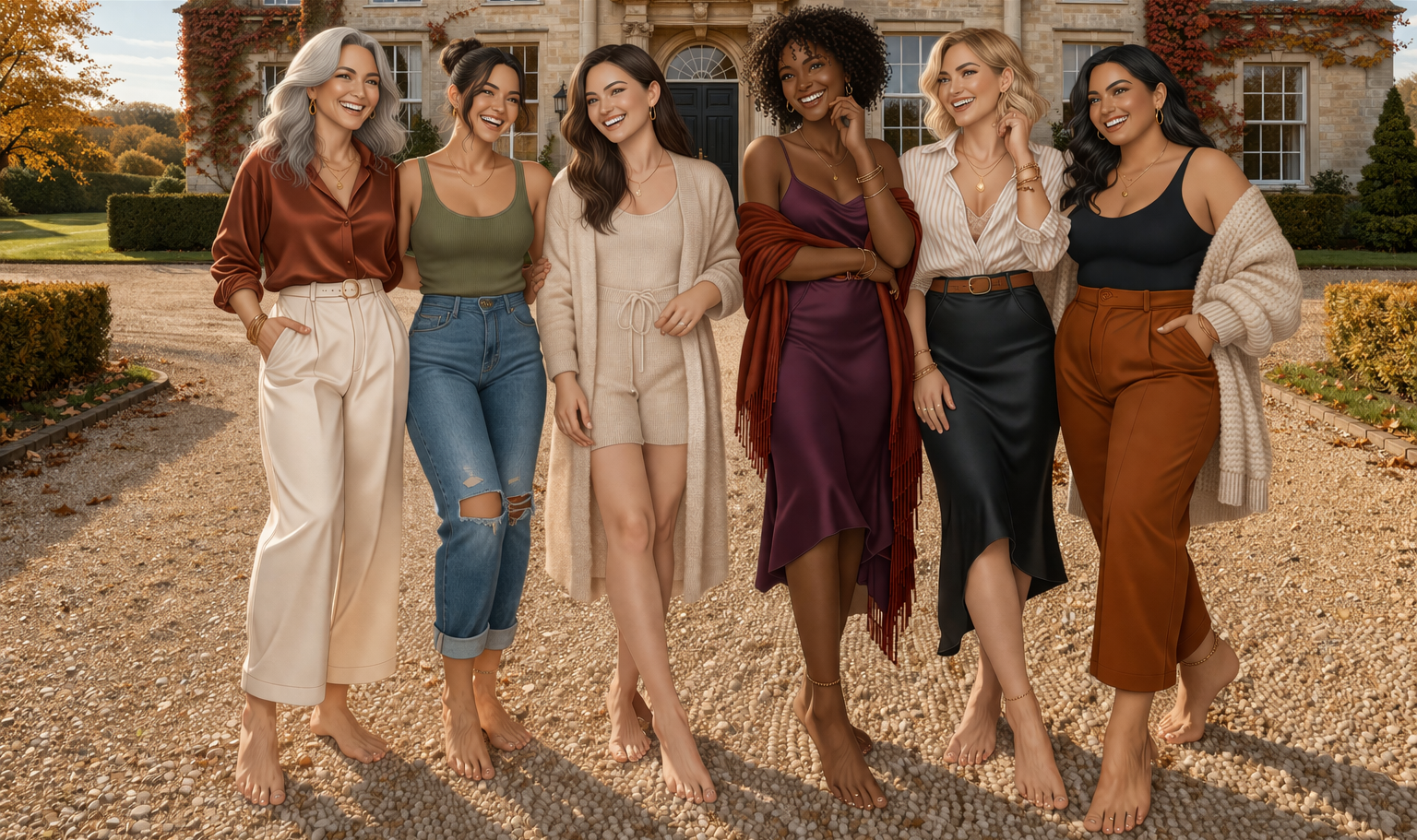
The final step of getting dressed is often treated as inevitable.
Shoes go on last. They complete the look, ground the silhouette and signal that the wearer is ready to step into the world. An outfit without them can feel incomplete, as though something essential has been left undone.
But inside the home, that logic frequently dissolves.
Shoes come off at the door. The outfit remains. And what’s left behind is a version of style that is less about presentation and more about experience — a look that was designed to be seen, now quietly repurposed to be lived in.
The idea of a finished look
Fashion has long relied on the concept of completion.
Outfits are constructed with intention, each element contributing to a cohesive whole. Footwear plays a central role in that equation. It affects posture, proportion and tone, often determining whether a look reads as casual, formal or somewhere in between.
Without shoes, that framework shifts.
The visual balance changes. The outfit no longer resolves in the expected way. What was once a finished composition becomes something looser, more open-ended.
For many, this feels like a loss. For others, it reveals a different kind of possibility.
Where fashion meets daily life
The moment shoes are removed marks a transition.
It is often subtle — a step inside, a pause at the entryway — but the effect is immediate. The body relaxes. Movement becomes quieter, more grounded. The environment itself feels different.
In that moment, clothing stops functioning primarily as a signal to others and begins to operate as a lived experience.
A tailored pair of trousers softens without the structure of a shoe. A dress shifts from occasion to comfort. Even casual wear takes on a different character when the final layer is absent.
The outfit remains intact, but its purpose has changed.
Interiors as a different runway
Most fashion is designed with the outside world in mind.
Public spaces impose expectations. Surfaces are unpredictable, weather conditions vary and footwear serves both practical and symbolic roles. Shoes protect, but they also communicate.
Indoors, those demands recede.
Floors are controlled, environments are stable and movement is more contained. In this setting, the absence of shoes is not a deficiency but an adaptation.
The home becomes its own kind of runway, one where the rules are less rigid and the priorities shift toward comfort, texture and ease.
The visual shift at the ankle
Removing shoes alters more than comfort; it changes how an outfit is read.
The line of the leg extends naturally, uninterrupted by the structure of a sole or heel. The overall silhouette softens, losing some of the sharpness that footwear can introduce.
There is also an element of exposure. Bare feet are rarely part of formal styling. Their presence suggests a private context, one that is less concerned with outward presentation.
This can make the look feel more intimate, even when the clothing itself remains unchanged.
Signals of status and their absence
Footwear has long served as a marker of status.
Designer labels, materials and condition are all read quickly, often subconsciously. Shoes can communicate wealth, taste and attention to detail in ways that other garments do not.
Removing them temporarily suspends that system.
In a domestic setting, this is practical. In a social one, it can feel like a quiet departure from expectation. The absence of shoes removes a layer of signaling, shifting attention to the rest of the outfit — and to the person wearing it.
For some, this reads as ease. For others, as confidence.
Cultural context and evolving norms
The practice of removing shoes indoors varies widely across cultures.
In many parts of the world, it is standard, tied to cleanliness and respect. In others, it has historically been less common, associated more with informality.
As lifestyles change, so do these norms.
With more time spent at home — working, socializing, relaxing — the distinction between indoor and outdoor dress has blurred. Clothing that once existed primarily in public settings is now worn across a broader range of contexts.
In this environment, the absence of shoes becomes more visible and more accepted.
Redefining completion
The notion that an outfit must be completed at the shoe is, at its core, a convention.
It reflects an understanding of fashion as performance — something to be presented, evaluated and interpreted. But clothing also exists beyond that framework. It adapts to movement, to space and to the rhythms of daily life.
When shoes are removed, the outfit does not disappear. It changes.
It becomes less about adherence to a visual ideal and more about how it functions in real time. The emphasis shifts from how it looks in a static moment to how it feels across an entire day.
A different kind of finish
What emerges from this shift is not an unfinished look, but a redefined one.
It is softer, more flexible and more closely aligned with lived experience. It acknowledges that style does not end at the threshold, but continues to evolve once the door is closed.
The shoes remain by the entryway, where they were left.
Inside, the outfit carries on without them — altered, perhaps, but no less intentional.
In that space between completion and comfort, a different kind of fashion takes shape. One that does not insist on being fully resolved, but instead finds its balance in what is left undone.
========
Maren Ellsworth Hale is a fashion and culture writer focused on how clothing functions in everyday life. Her work explores the intersection of design, habit and lived experience. This article was written, in part, utilizing AI tools.






Comments