The Chair You Don’t Sit In: How Every House Develops Its Own Quiet No-Man’s-Land
Published in Home and Consumer News
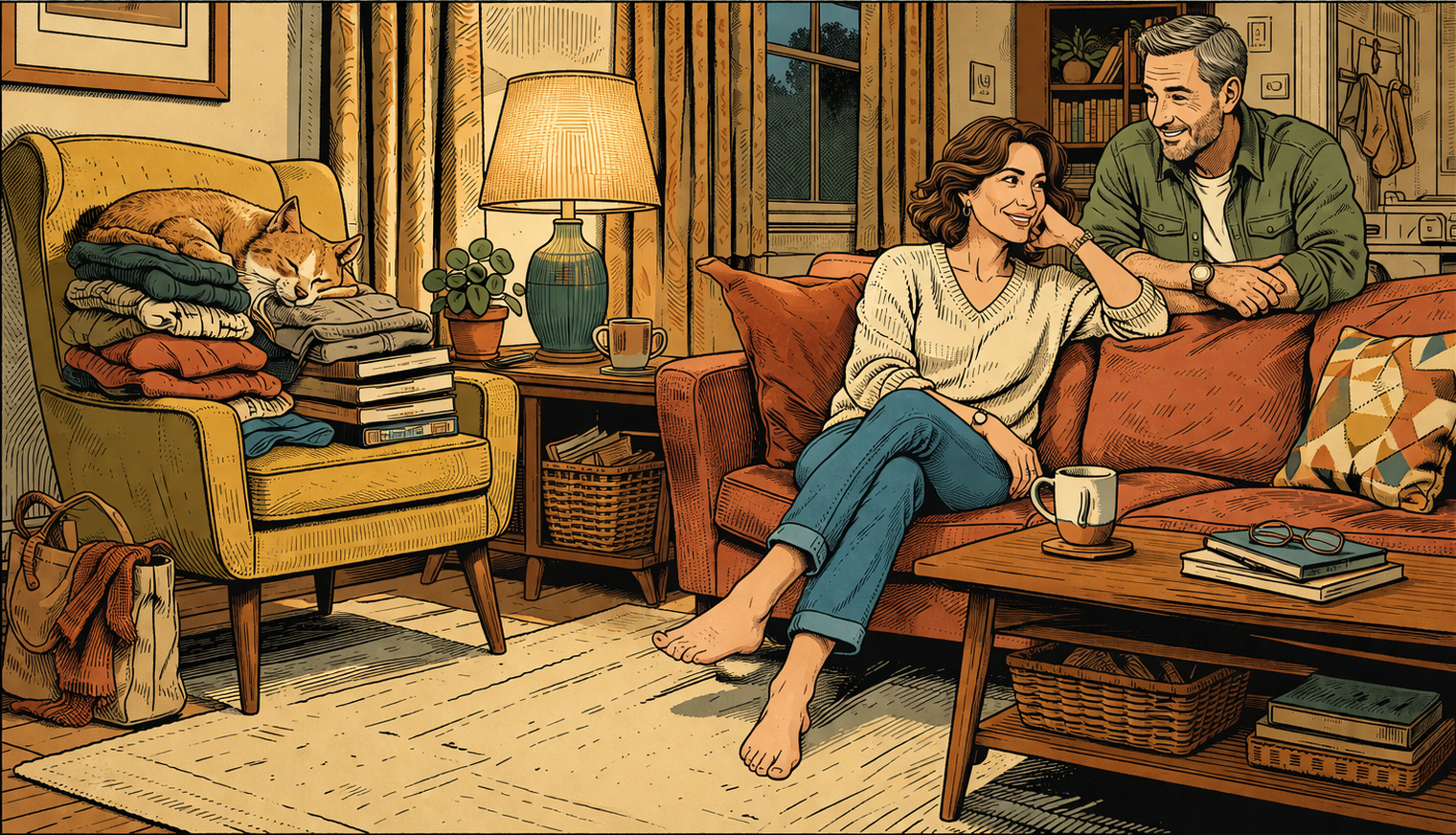
Every home has a chair that no one uses. It may be well-placed, well-made and even visually appealing. It may have been purchased with intention, selected to complete a room or provide additional seating. And yet, it remains empty.
Over time, it becomes something else — a place for folded laundry, a temporary resting spot for bags, a surface that collects rather than supports.
The emergence of unused spaces
Unused areas in a home rarely begin that way.
They are created through small decisions repeated over time. A chair is bypassed once in favor of a more comfortable option. A corner is left unoccupied because it feels slightly out of the way.
These choices accumulate.
What begins as a minor preference becomes a pattern, and the pattern becomes a feature of the home. The space is no longer considered for its original purpose.
Instead, it is repurposed informally.
Comfort and habit
The primary driver of these “no-man’s-land” areas is comfort.
People tend to gravitate toward spaces that meet their needs most effectively. A couch with the right angle, a chair with the right support, a spot with the best lighting — these become the default choices.
Other areas, even if functional, may fall short in subtle ways.
A chair may be slightly too upright, a corner slightly too dim. These small deficiencies are enough to discourage regular use.
Over time, habit reinforces the preference. The favored spots are used repeatedly, while others are ignored.
The role of intention versus reality
Many homes are arranged with intention.
Furniture is placed to create balance, symmetry or aesthetic appeal. Rooms are designed to accommodate guests or to reflect a particular style.
However, the way a home is used often diverges from these intentions.
Daily life introduces new priorities. Convenience, comfort and routine begin to shape the space more than initial design choices.
The unused chair becomes a symbol of this divergence — a reminder that how a space is imagined and how it is lived in are not always aligned.
Pets as early adopters
Interestingly, pets often recognize and claim these unused areas before humans do.
A dog may settle into a corner that people avoid. A cat may take possession of a chair that no one sits in.
For animals, the criteria are different. They may be drawn to warmth, vantage points or simply the absence of competition.
In doing so, they repurpose the space in a way that aligns with their needs, rather than the original design.
The accumulation of objects
Once a space is no longer used for its intended purpose, it often becomes a temporary holding area.
Items are placed there “for now,” with the intention of being moved later. Over time, these items accumulate.
The chair becomes a stand for clothing. The corner becomes a storage zone for miscellaneous objects.
This process is gradual and often unnoticed until the space is fully transformed.
Reclaiming or accepting
Homeowners faced with these unused areas have two options: reclaim the space or accept its new function.
Reclaiming requires intentional effort. It may involve rearranging furniture, improving comfort or redefining the purpose of the area.
Acceptance, on the other hand, involves recognizing the space for what it has become and incorporating it into the home’s actual use pattern.
Neither approach is inherently better. The choice depends on priorities and preferences.
What unused spaces reveal
These quiet, overlooked areas offer insight into how people live.
They reveal preferences, habits and the subtle ways in which daily life shapes the environment. They show that functionality often outweighs intention, and that comfort tends to prevail over design.
They also highlight the dynamic nature of a home.
A home is not a static arrangement of objects, but a living space that evolves over time. Its layout and use reflect the people within it, changing as their needs and routines change.
A different way of seeing
Recognizing these unused spaces can lead to a different way of seeing one’s home.
It encourages a closer look at how spaces are used, and why certain areas are favored over others. It invites consideration of whether the current arrangement supports daily life or simply reflects an initial vision.
In some cases, small adjustments can make a space more inviting. In others, it may be more practical to let the space serve its new, unintended purpose.
Either way, the unused chair is no longer just an oversight.
It becomes a marker of how a home is truly lived in — not as it was planned, but as it has naturally evolved.
========
D. Kellan Rowe is a home and lifestyle writer who examines how everyday habits shape living spaces. His work focuses on the intersection of design, behavior and comfort. This article was written, in part, utilizing AI tools.







Comments